
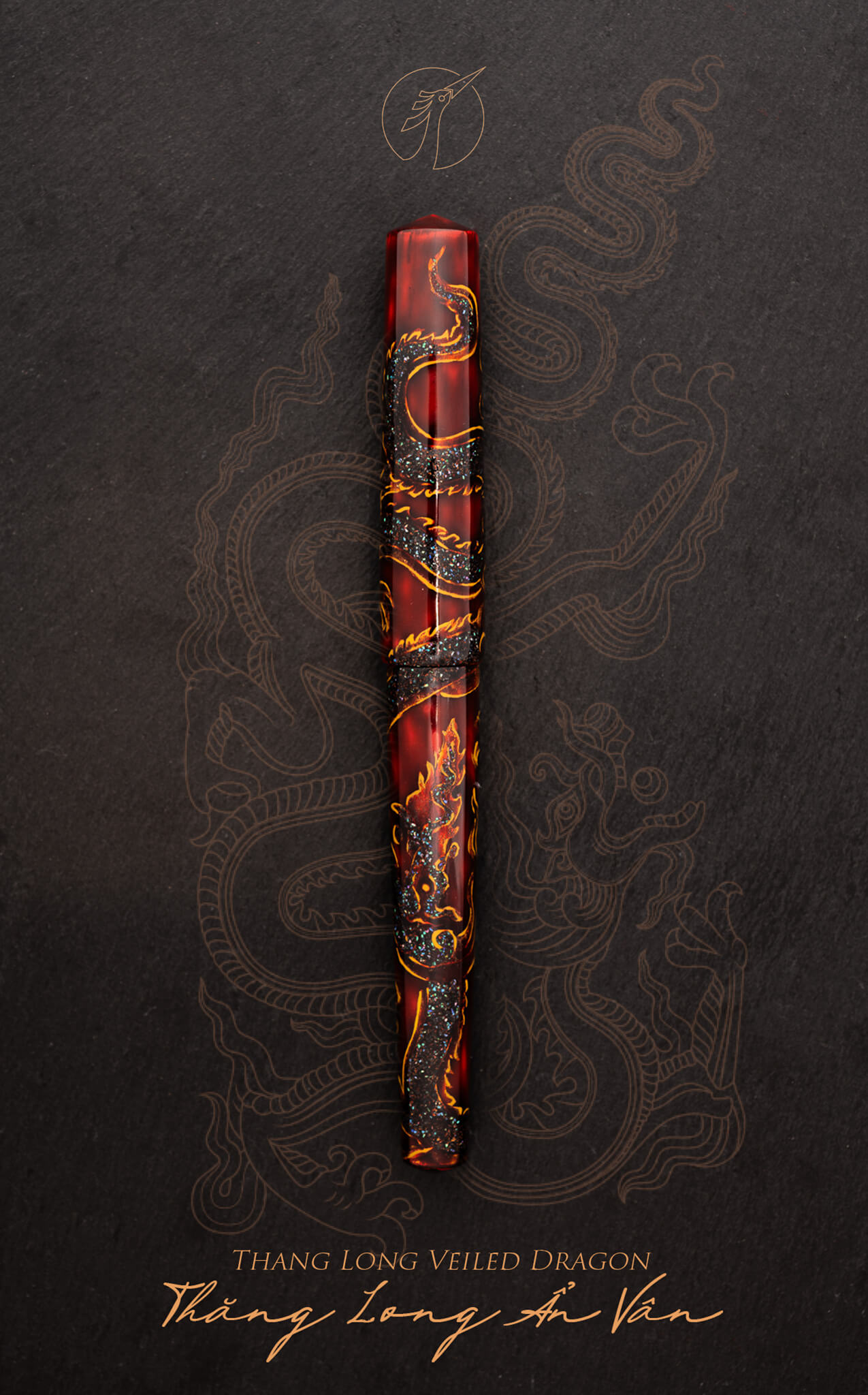
Vietnamese Lacquer Fountain Pen – Thang Long Veiled Dragon
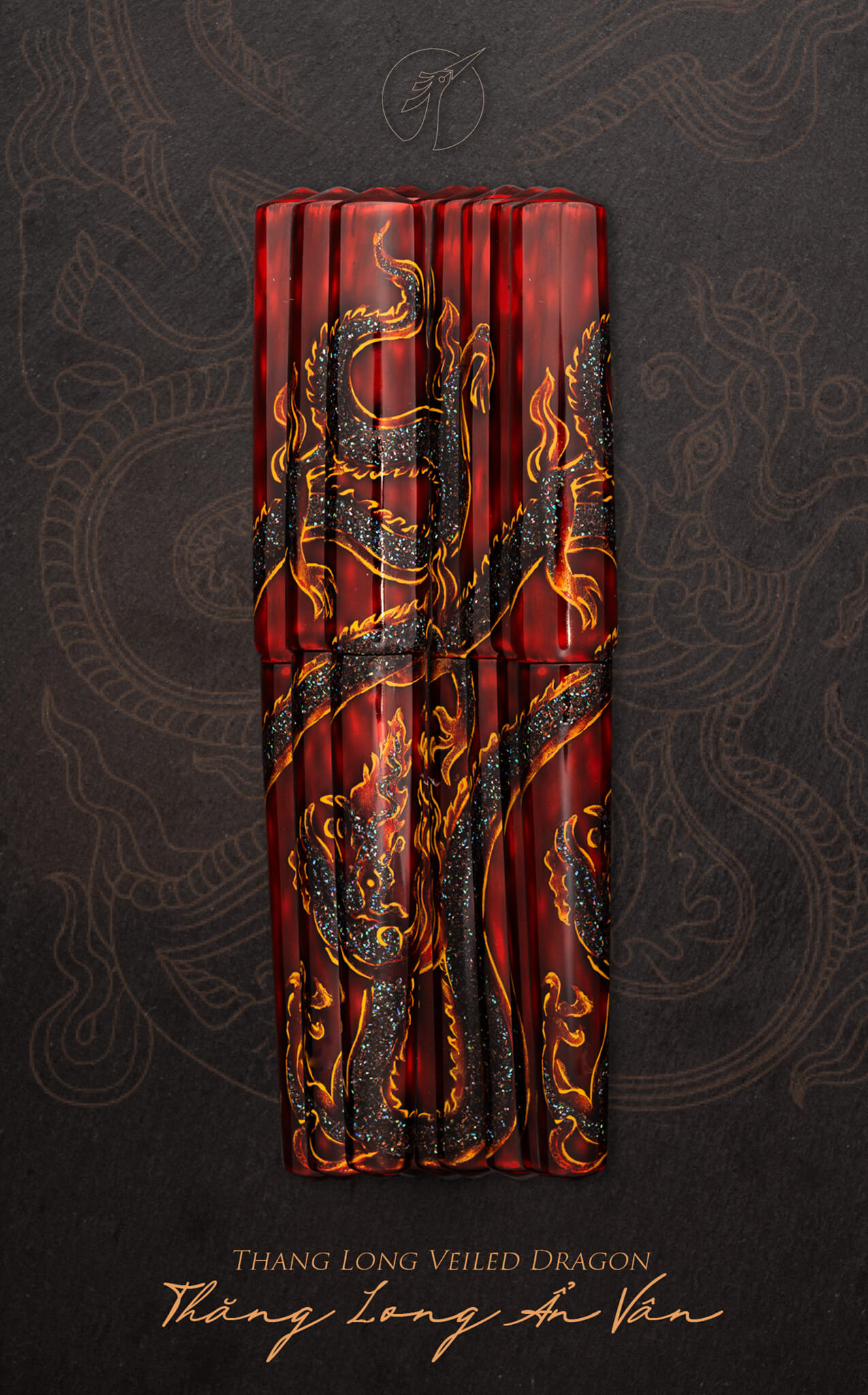
In Imperial Citadel of Thang Long (present-day Hanoi) in 1010, when Ly Thai To relocated the capital and ushered in a flourishing era of the Ly Dynasty, the Ly-era dragon rose as the supreme symbol of wisdom, humanity, and prosperity. Neither fierce nor ostentatious in its display of power, the Ly dragon was graceful like the sacred spirit of the Vietnamese land, majestic yet serene, transcendent yet profound.
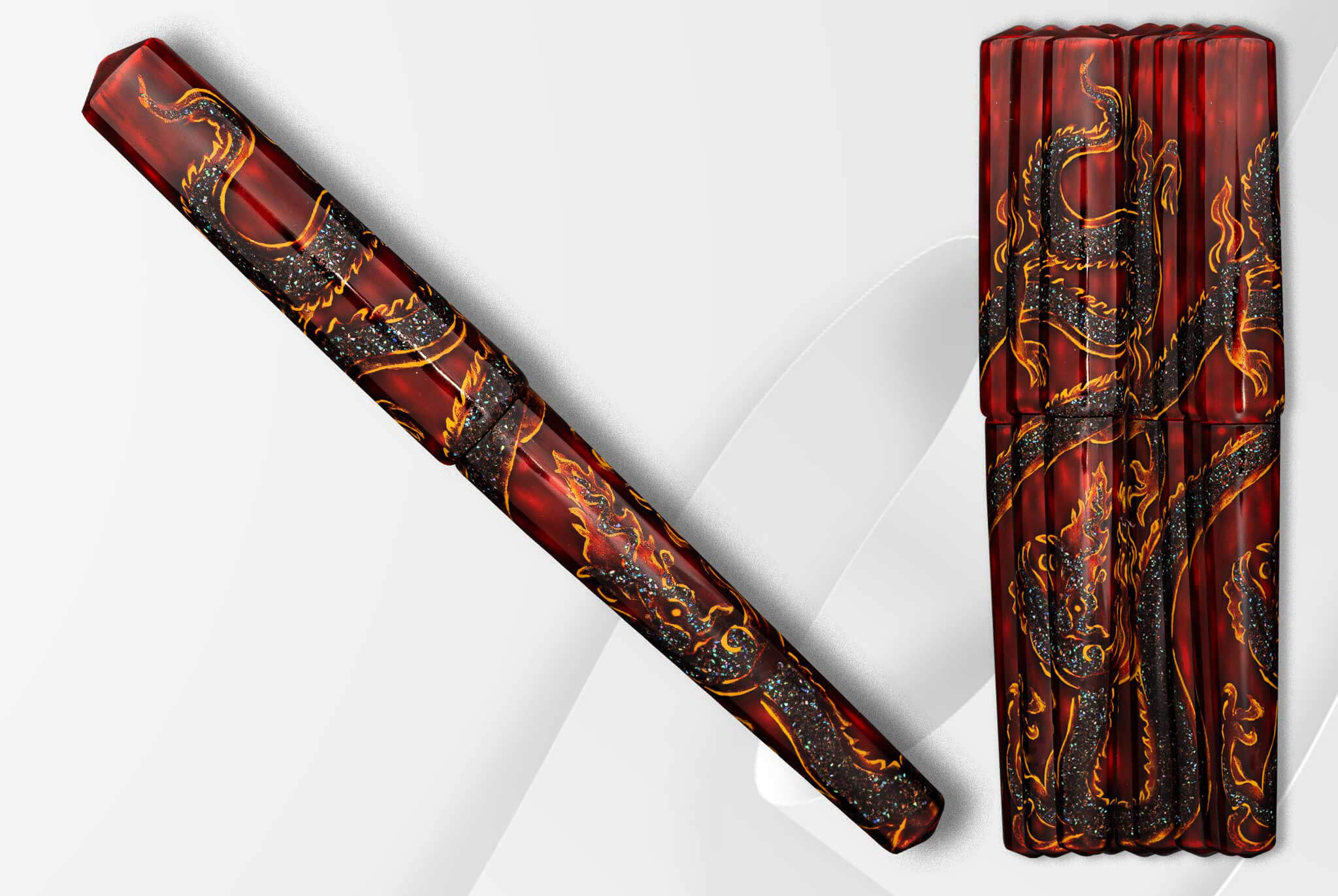
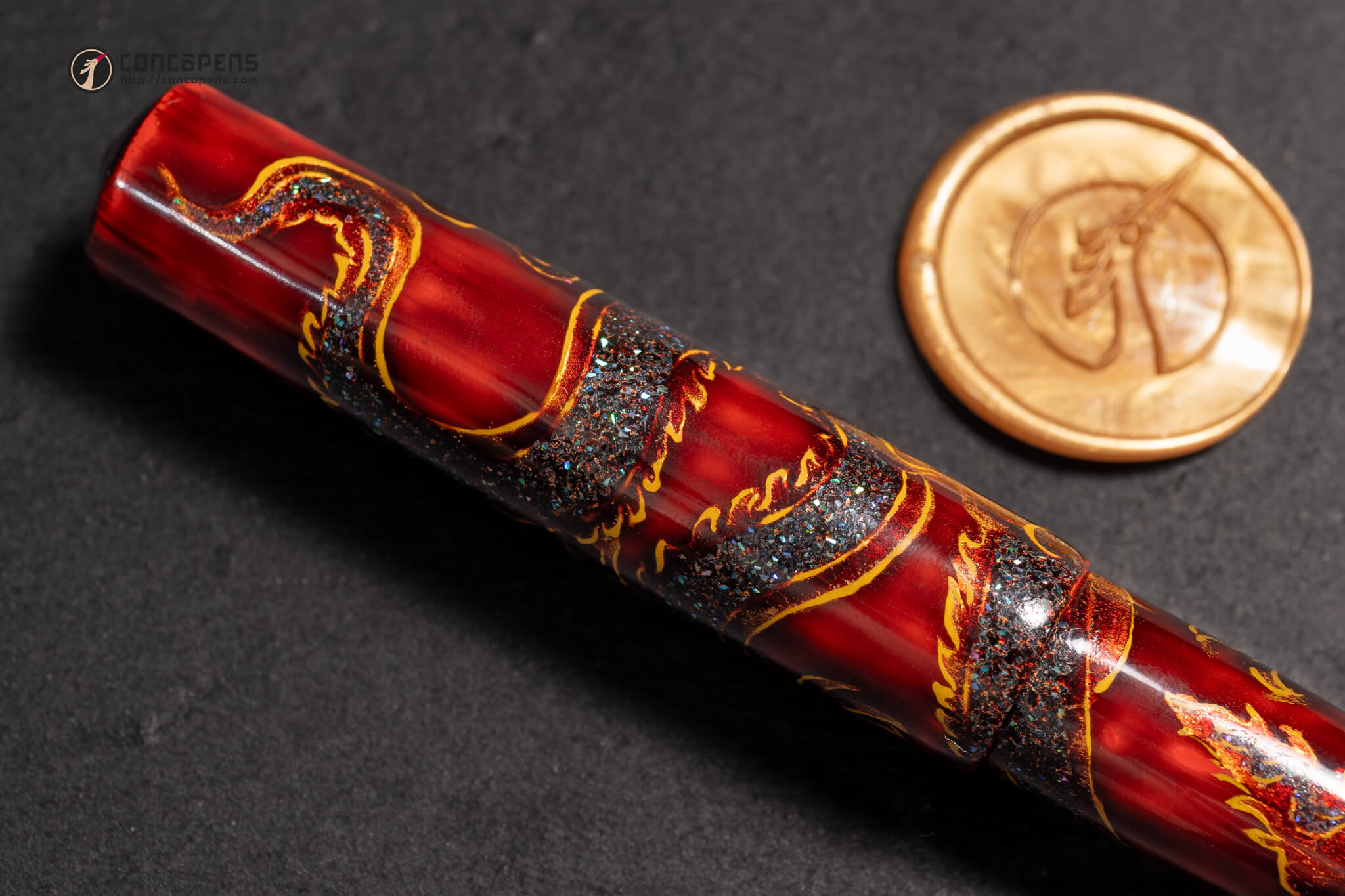
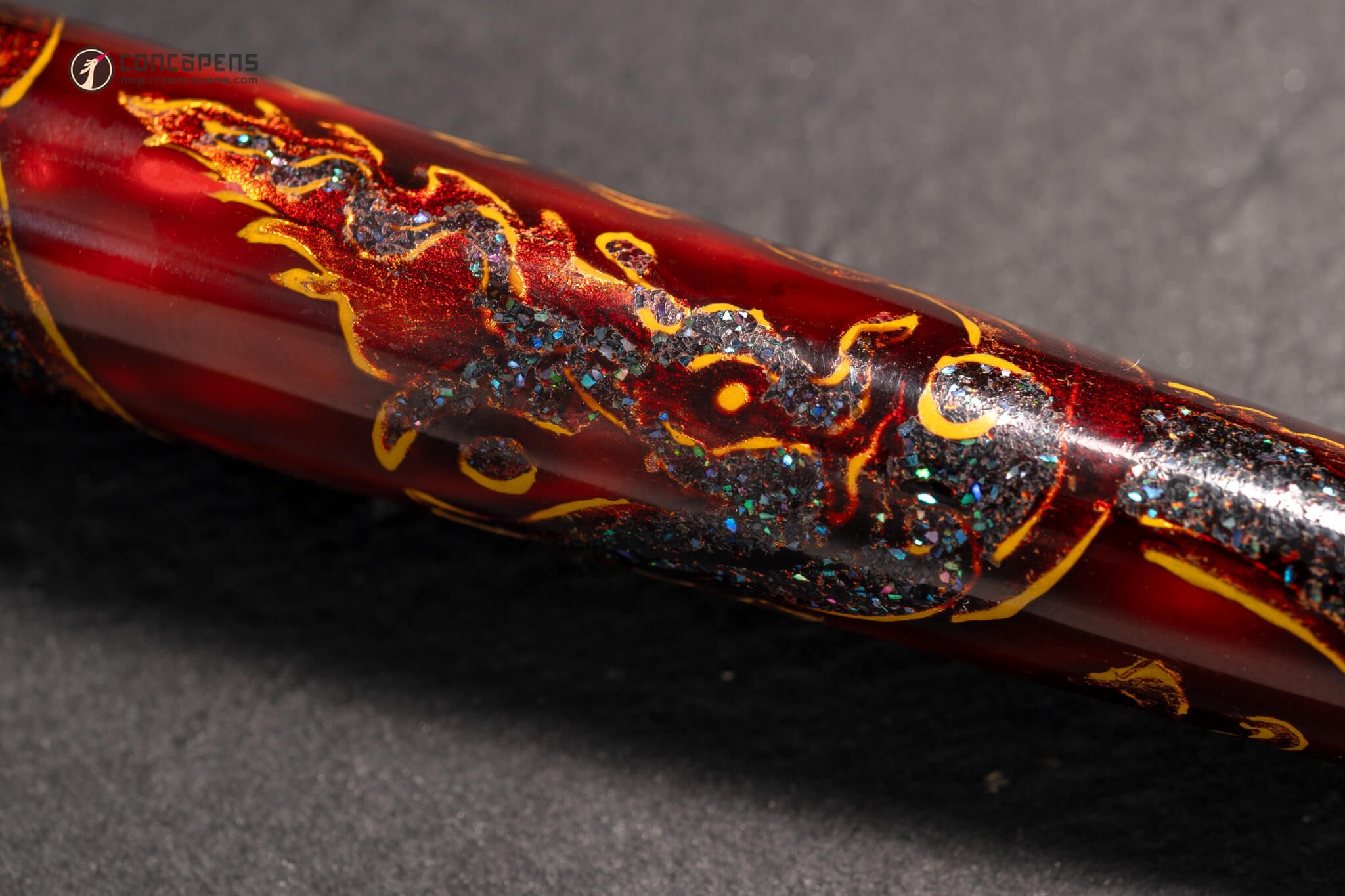
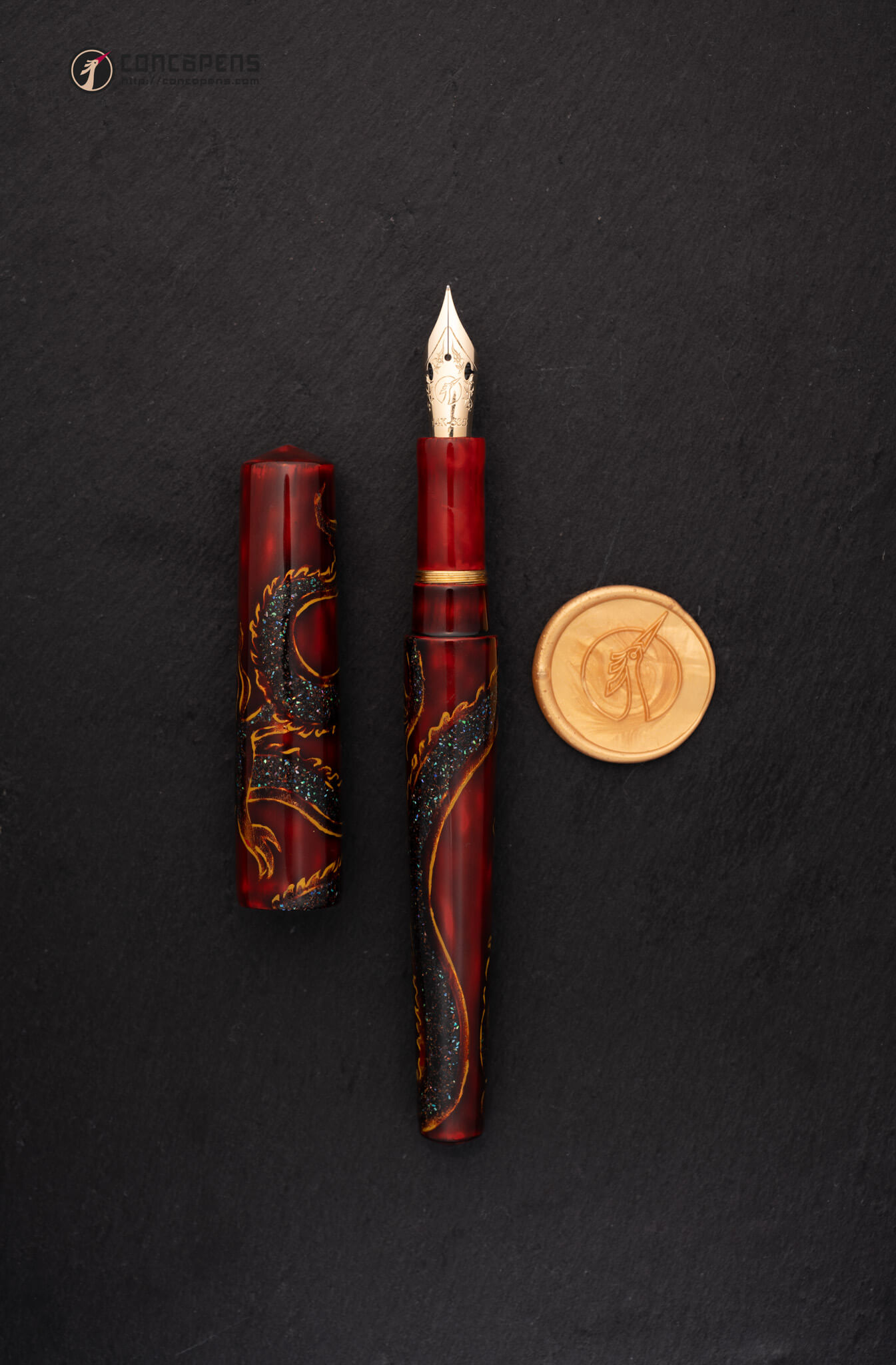
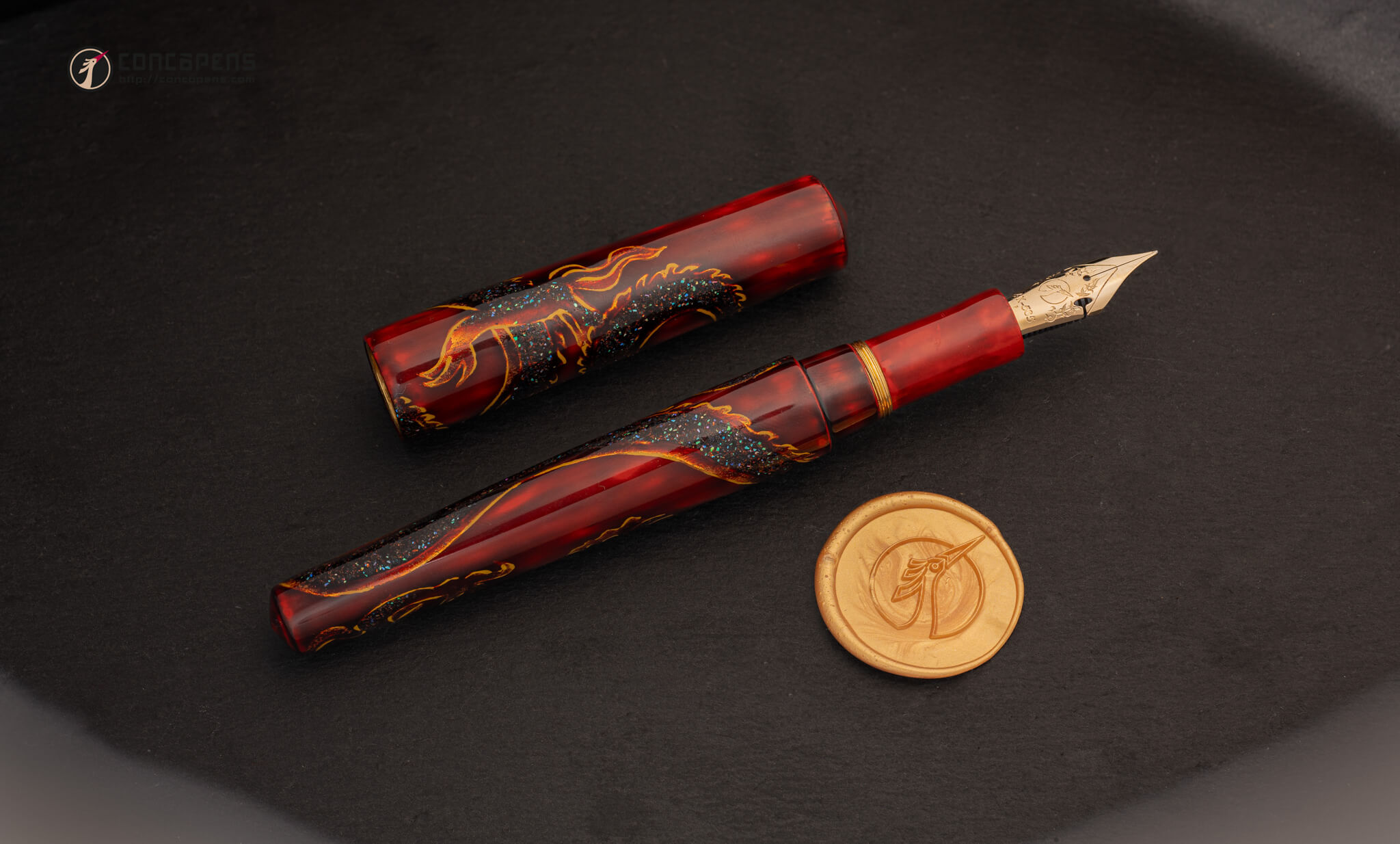
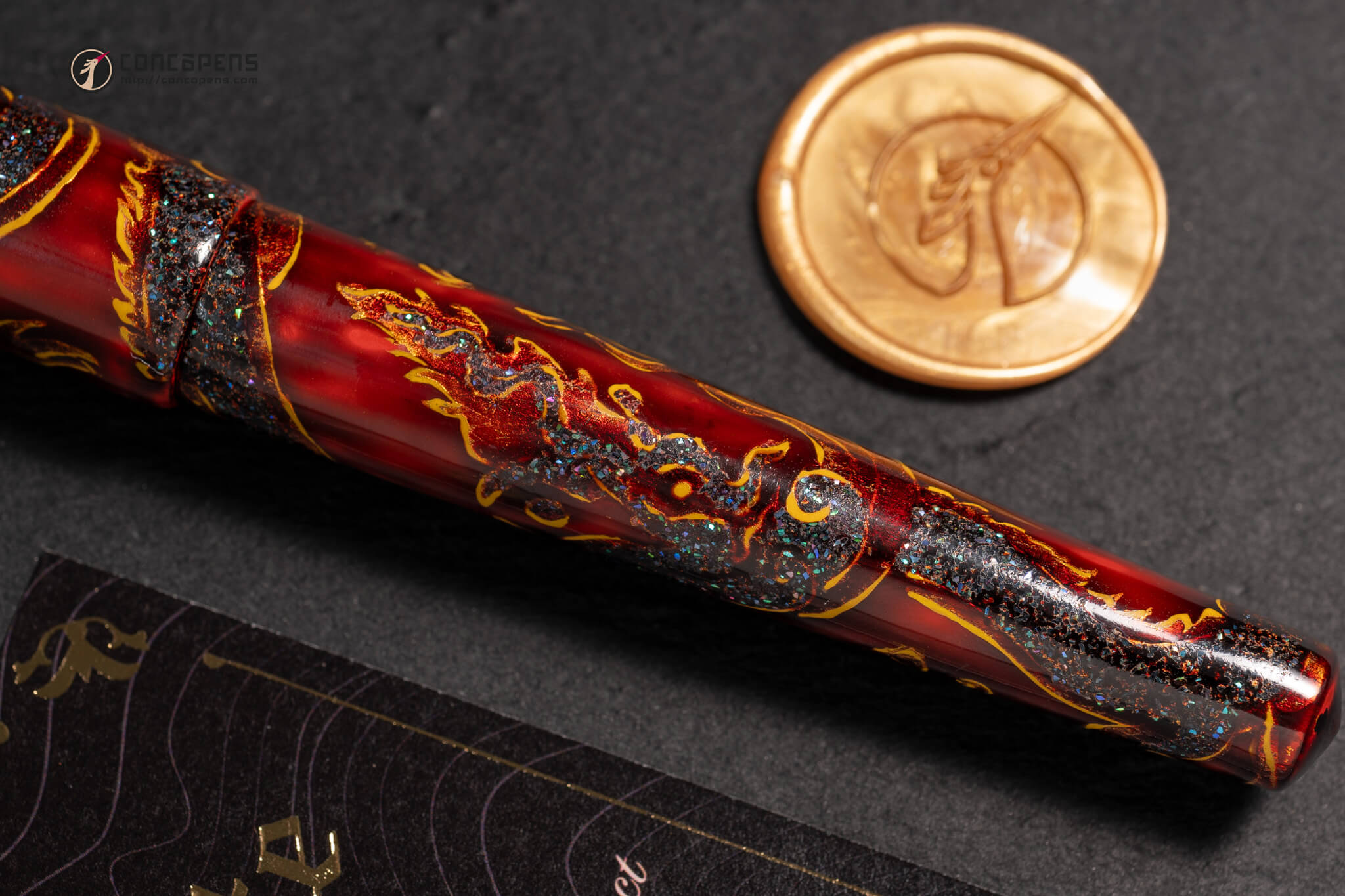
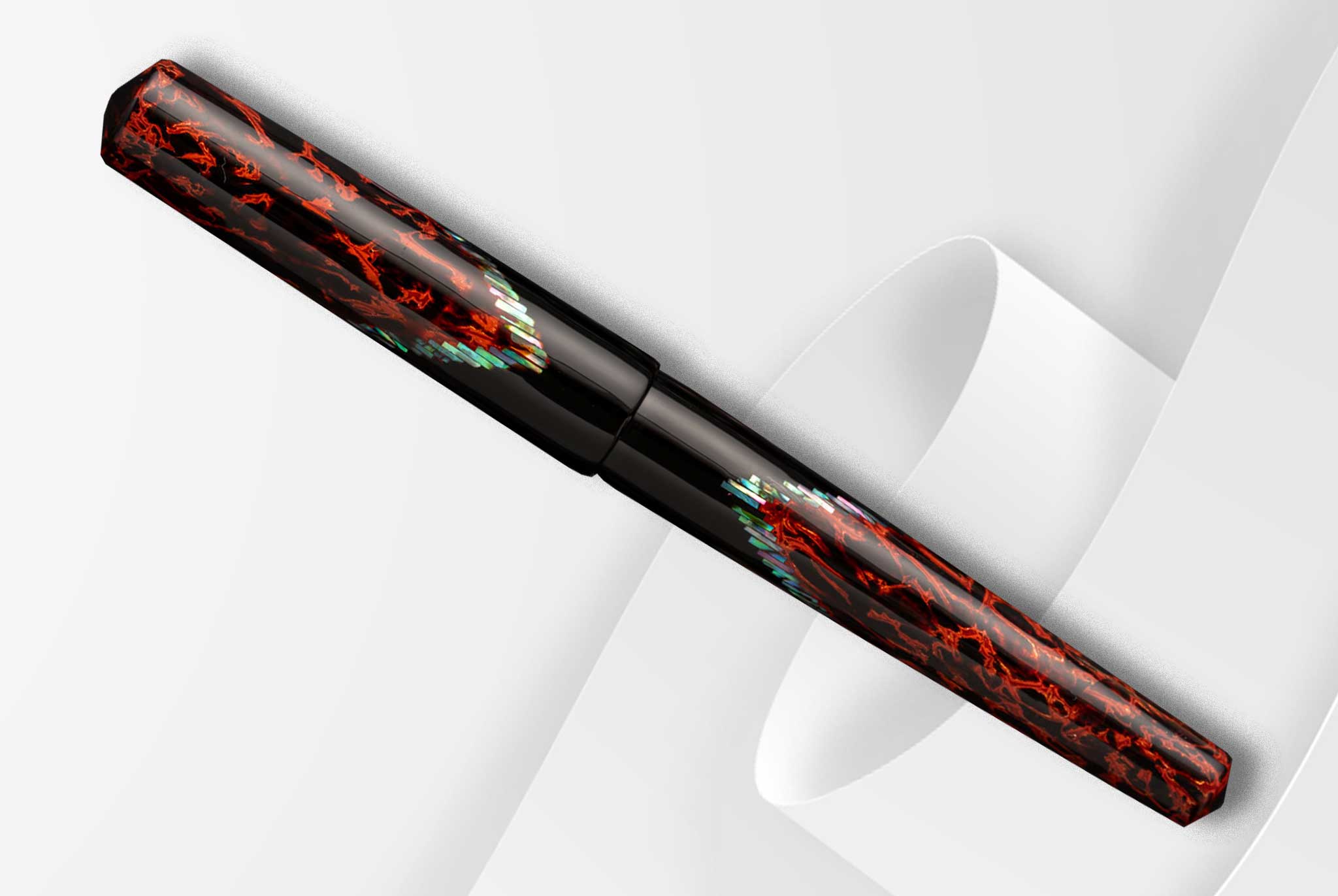
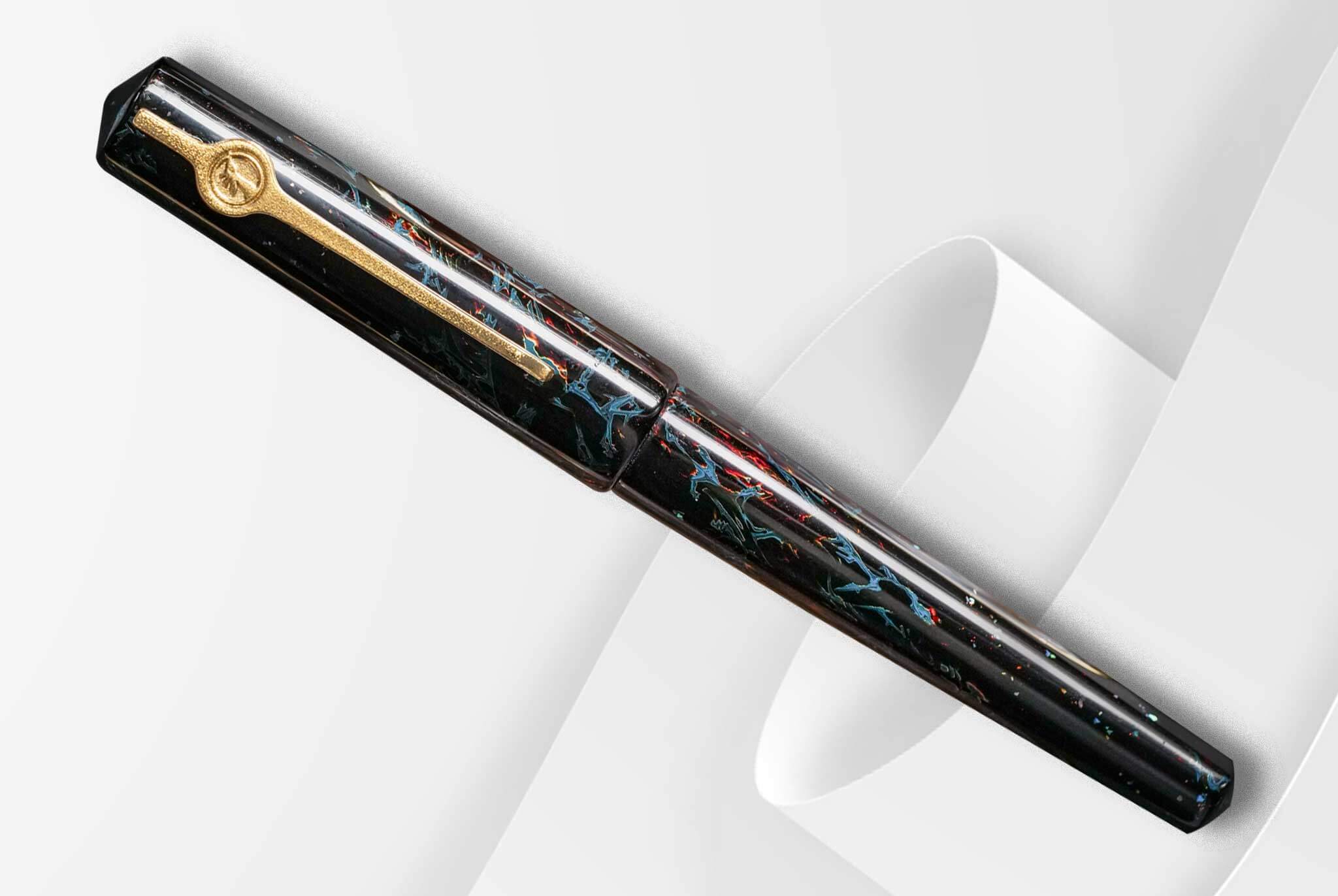
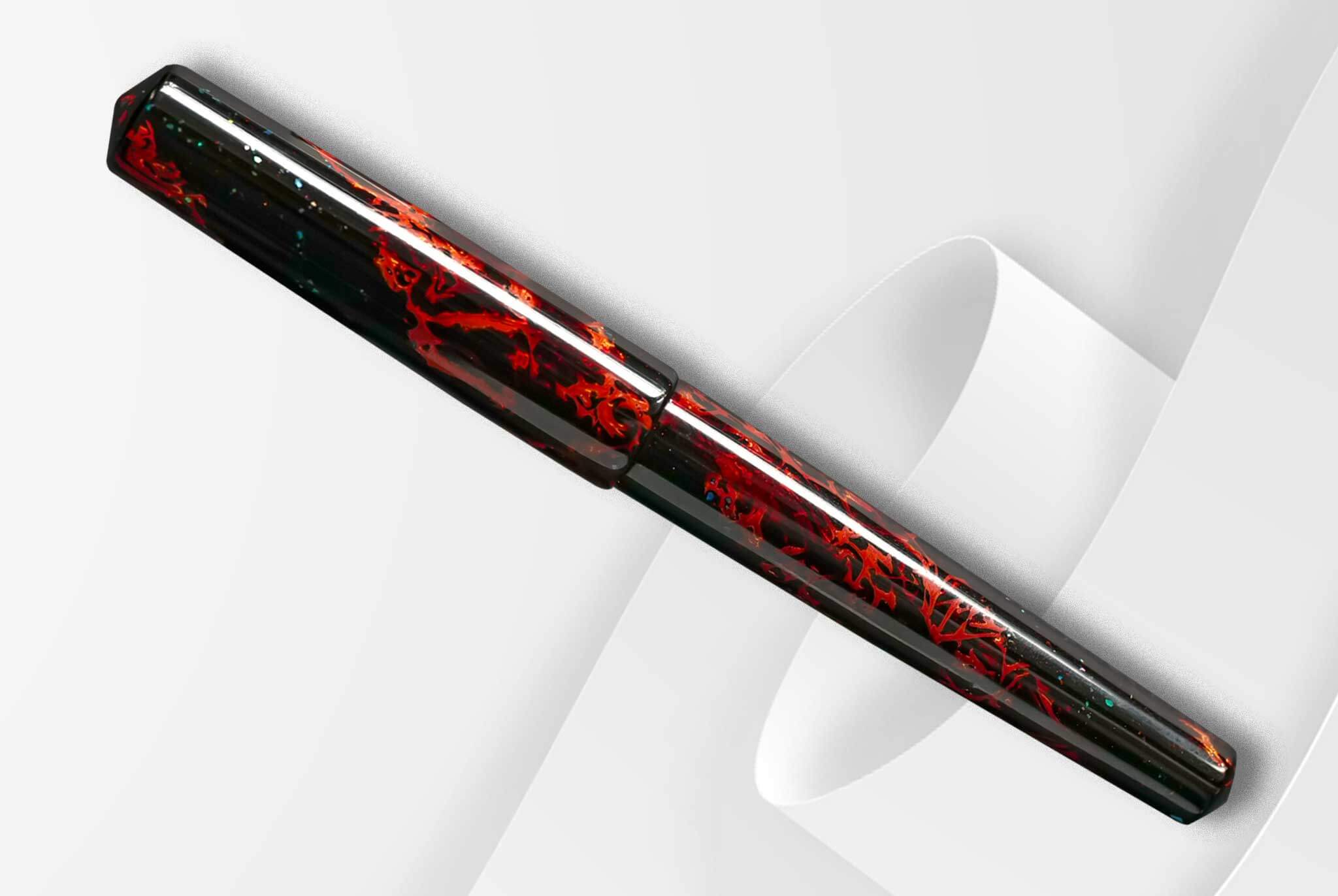
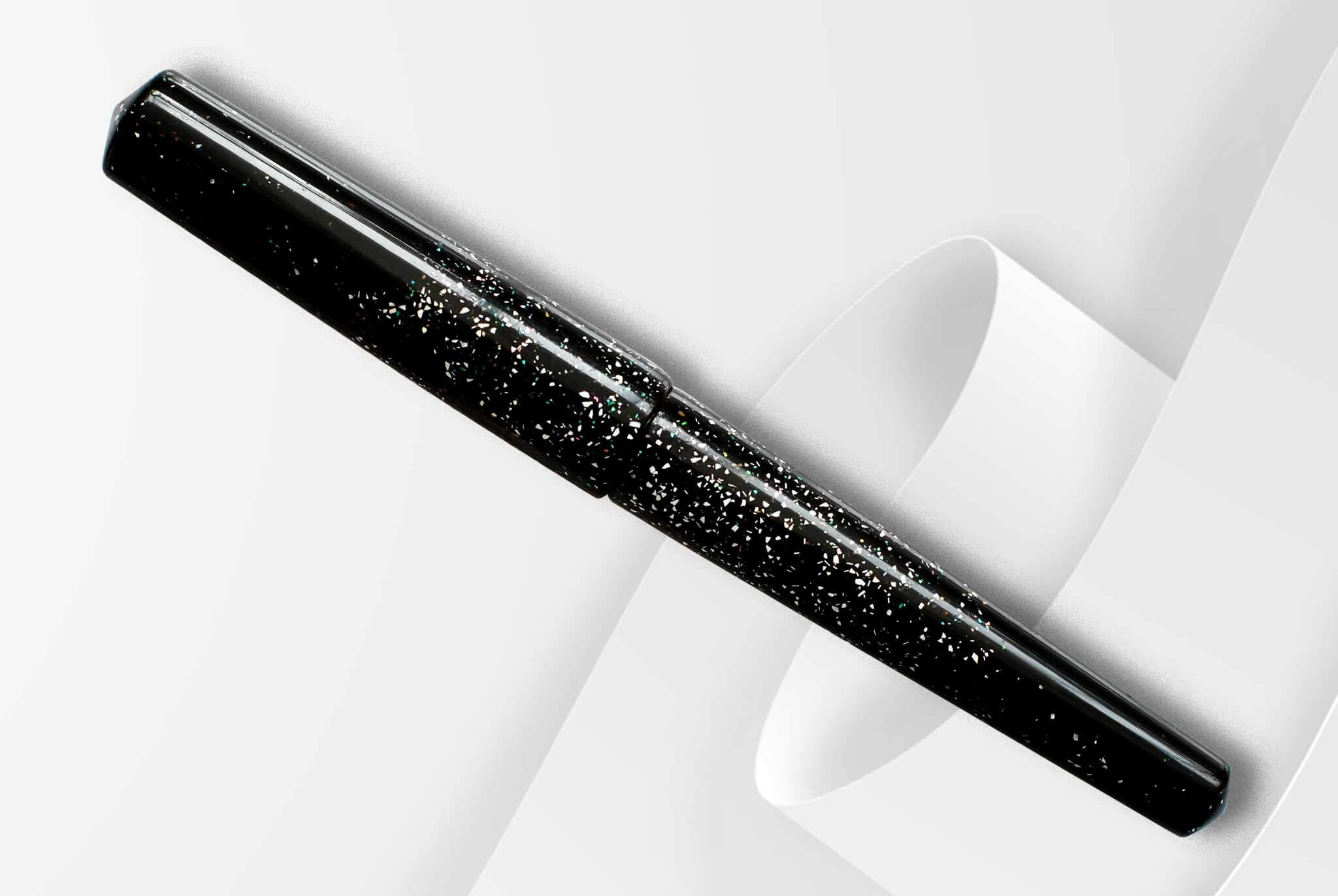
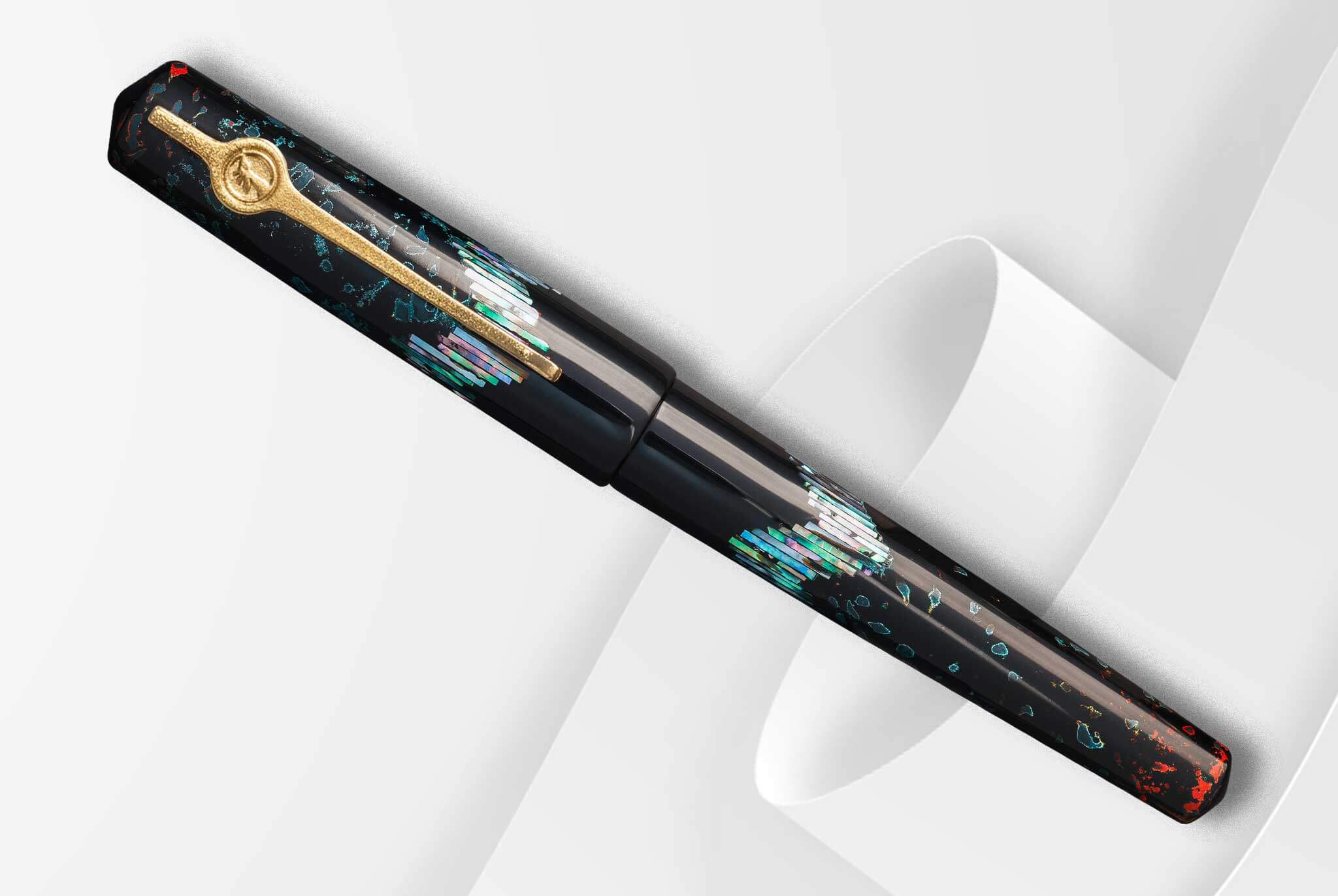
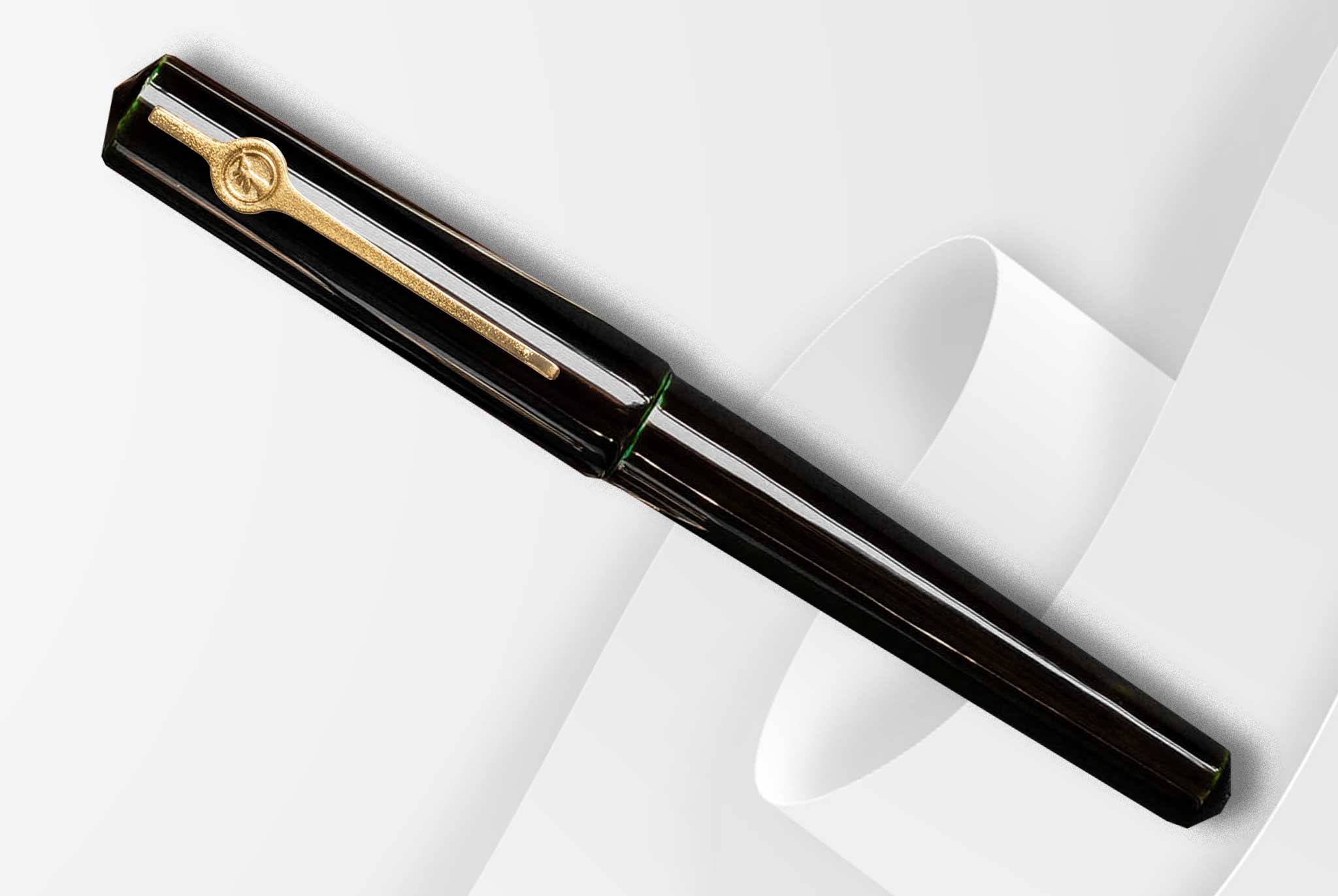
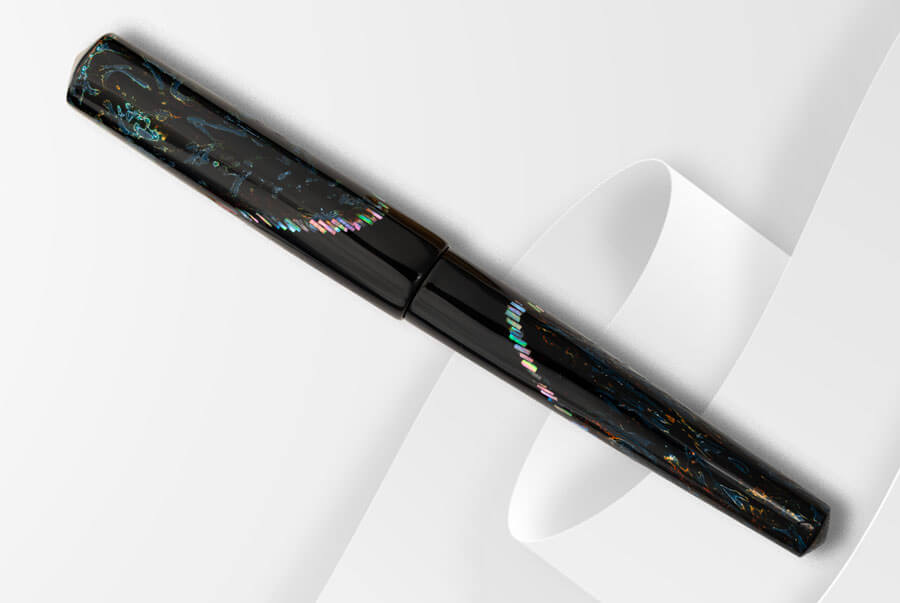
Inspired by this legacy, the Vietnamese Lacquer Fountain Pen – Thang Long Veiled Dragon (Thăng Long Ẩn Vân) was created as a miniature imperial treasure. The barrel is meticulously handcrafted using multiple layers of traditional Vietnamese lacquer, revealing the image of a dragon emerging through clouds, symbolizing hidden wisdom and the noble character of one who gathers strength before rising like a dragon. Every line is not merely decorative art, but a declaration of identity and heritage.
This is not simply a fountain pen, but a work of art, a crystallization of the spirit of Thang Long shaped by artisans’ hands, and a cultural legacy continued through every stroke of ink, created for those who carry within them the aspiration to build, to lead, and to leave a distinct mark in the modern era.
1. Materials Used in the Vietnamese Lacquer Fountain Pen – Thang Long Veiled Dragon
Traditional Vietnamese lacquer is a surface decoration technique that creates diverse effect patterns on lacquer surfaces. Craftsmen use specialized tools and materials, including:
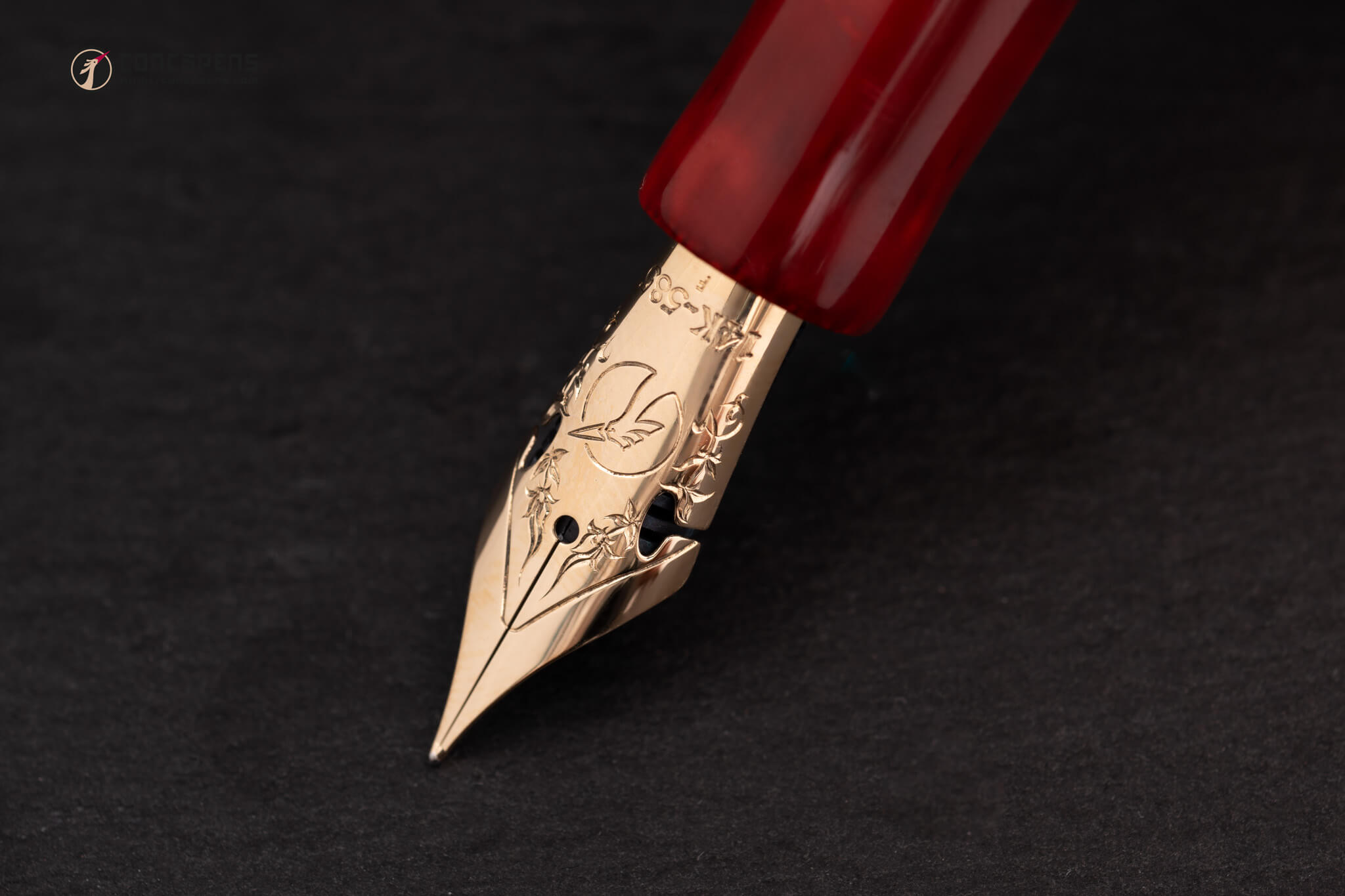
The pen core (or nib) is carefully selected by artisans and is made entirely from precious Vietnamese woods such as ebony, rosewood, camwood, and sandalwood.
Tam Nong lacquer is the primary material used to create the cloud-like patterns on the lacquered surface of the pen. Con Cò Pens’ lacquer pens use traditional decorative materials such as gilded gold, silver leaf, ground gold, silver foil, and natural materials like mother-of-pearl, seashells, and abalone powder to achieve the cloud effect on the lacquer surface.
Lacquer tree resin, which is the main adhesive used in the lacquer production process, is harvested in Phu Tho Province. This adhesive is used to bond the lacquer with the pen core.
The colors used in lacquer are derived from natural mineral powders. For example, green is created from malachite, blue from lapis lazuli, and red and yellow from cinnabar, orpiment, and mica. Additionally, precious metals such as renowned gilded gold and silver are incorporated during various stages of production.
Tools: Artisans use tools such as brushes, feather quills, or their hands to create patterns and textures on the lacquer surface.
Smoothing the Pen Core Surface: The surface of the pen core is carefully sanded to ensure that the lacquer adheres firmly to it.
Attaching Copper Threads and Polishing the Wood: Copper threads are attached, and the wood is polished before applying the lacquer layers.
Applying the First Layer of Lacquer: The first layer of lacquer is applied to the pen’s surface, establishing a base for the subsequent lacquer layers.
Creating Distinctive Features of Vietnamese Lacquer Art: This process enhances the unique characteristics of Vietnamese lacquer art and employs tools to craft distinctive patterns on the lacquer surface.
Surface Finishing: Finally, the lacquer surface is treated to smooth and enhance the pen’s shine.
All these steps are carried out by traditional Vietnamese lacquer artisans at CONCOPENS, involving hundreds of hours of work and waiting for multiple layers of lacquer to dry, resulting in the precious handcrafted product you hold in your hands.
As a handcrafted item produced through traditional methods, each lacquer pen requires a high level of precision and craftsmanship, which contributes to its unique value. Lacquer pens are highly valuable across various fields, including:
Culture: Through lacquer pens, the traditional Vietnamese lacquer art is more distinctly recognized both domestically and internationally. Alongside traditional lacquer products like paintings, boxes, vases, and plates, the creation and use of lacquer pens help preserve the beauty of Vietnamese handicrafts.
Education: Lacquer pens are used in education to help students understand the history and cultural heritage of Vietnam, as well as to develop writing and drawing skills.
Decoration and Gifts: Lacquer pens are utilized for decorating homes and offices or as meaningful gifts for friends and family. These products are often valued for their aesthetic appeal and their historical and cultural significance.
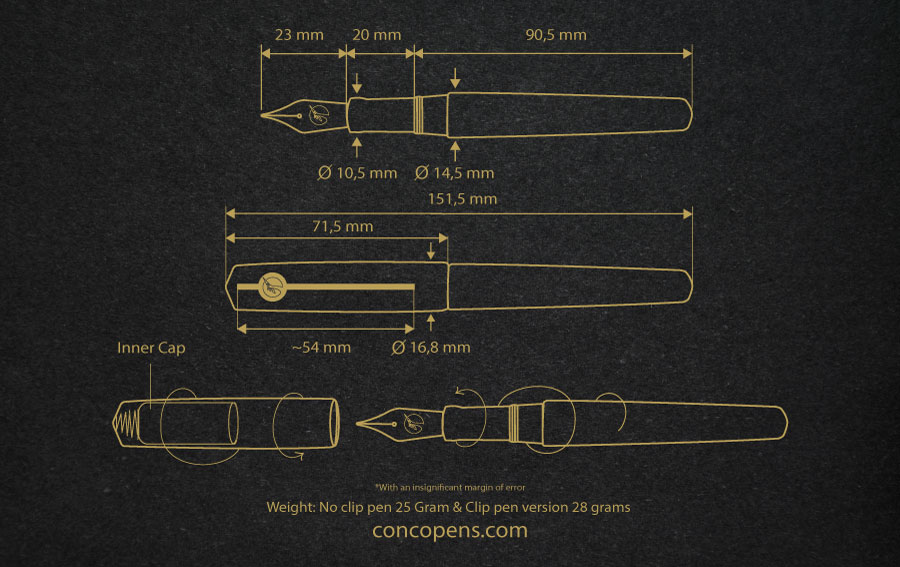
The fountain pen is intentionally optimized in size, based on real writing experience and long-term usage habits. The proportions of length and barrel diameter are carefully balanced, allowing the pen to rest comfortably in the hand without causing fatigue during extended writing sessions.
The grip section features a gentle taper that helps guide the fingers into the correct position, providing stability and precise control over each stroke. Overall, the design emphasizes comfort, balance, and a natural feel, making it suitable for both everyday note-taking and slower, more mindful writing moments, where one can fully appreciate the experience of a handcrafted fountain pen.
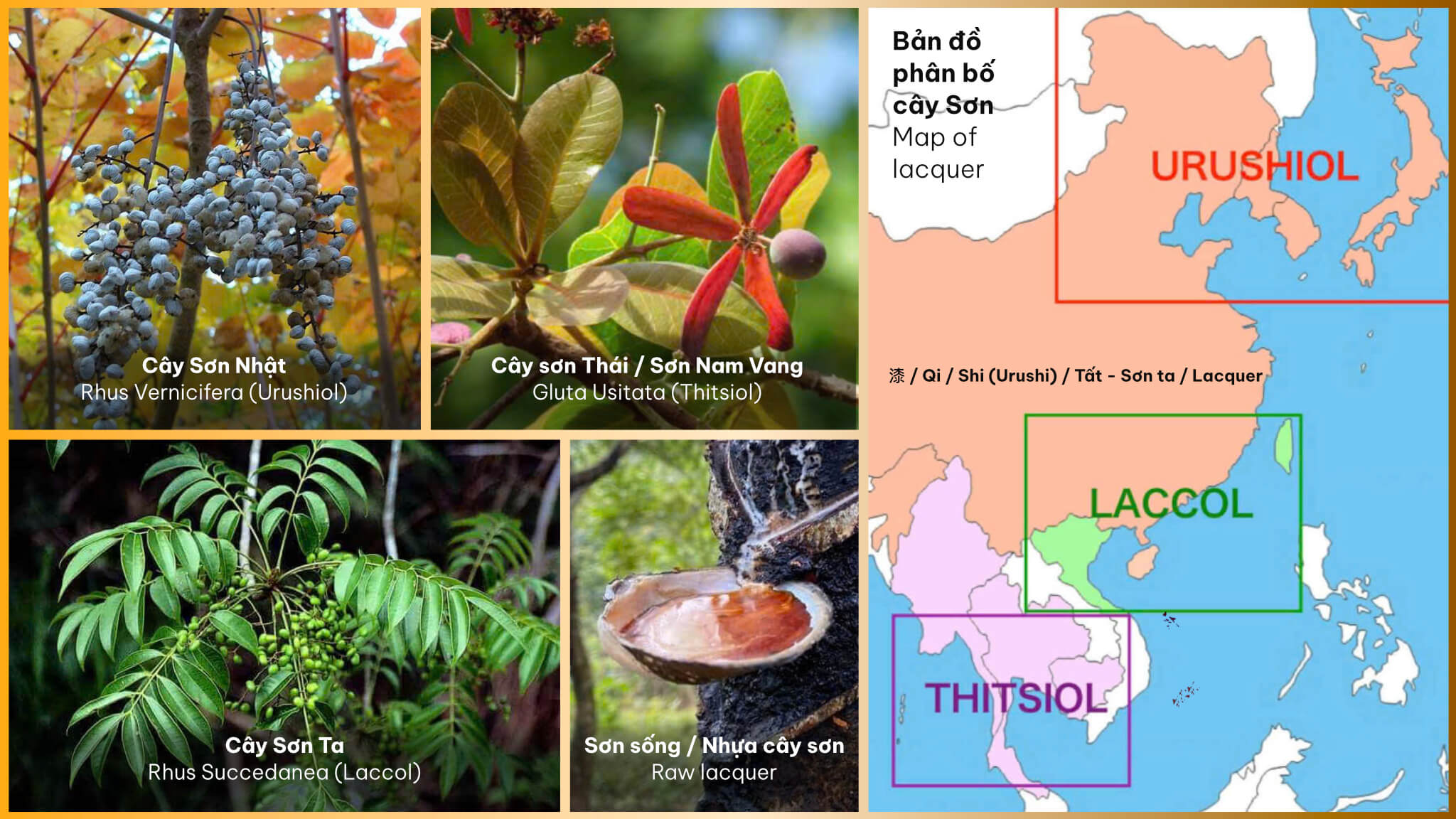
According to research materials, Vietnamese lacquer (sơn ta – laccol) and Japanese lacquer (urushi) both belong to the family of natural tree-resin lacquers that cure through enzymes and humidity. However, they differ in chemical structure and reaction dynamics.
Japanese urushi has shorter molecular chains and a higher number of double bonds, allowing it to cure more quickly and form a hard, highly glossy surface. In contrast, Vietnamese sơn ta has longer molecular chains with fewer double bonds, resulting in a slower curing process. In return, it offers greater flexibility, depth, and a warm, distinctive sheen.
This “slow but deep” characteristic is what creates the calm, enduring, and emotionally rich beauty of Vietnamese lacquer, setting it apart from the sharper, more crisp aesthetic of Japanese lacquer.
With its uniqueness and high artistic value, ConCoPens lacquer fountain pens deliver both spiritual meaning and everyday practicality. If you have any questions or need consultation, please contact us via email or our official fanpage. ConCoPens is always happy to assist you.
$1,000
$330
$325
$355
Price range: $435 through $845
$350
$170
$850